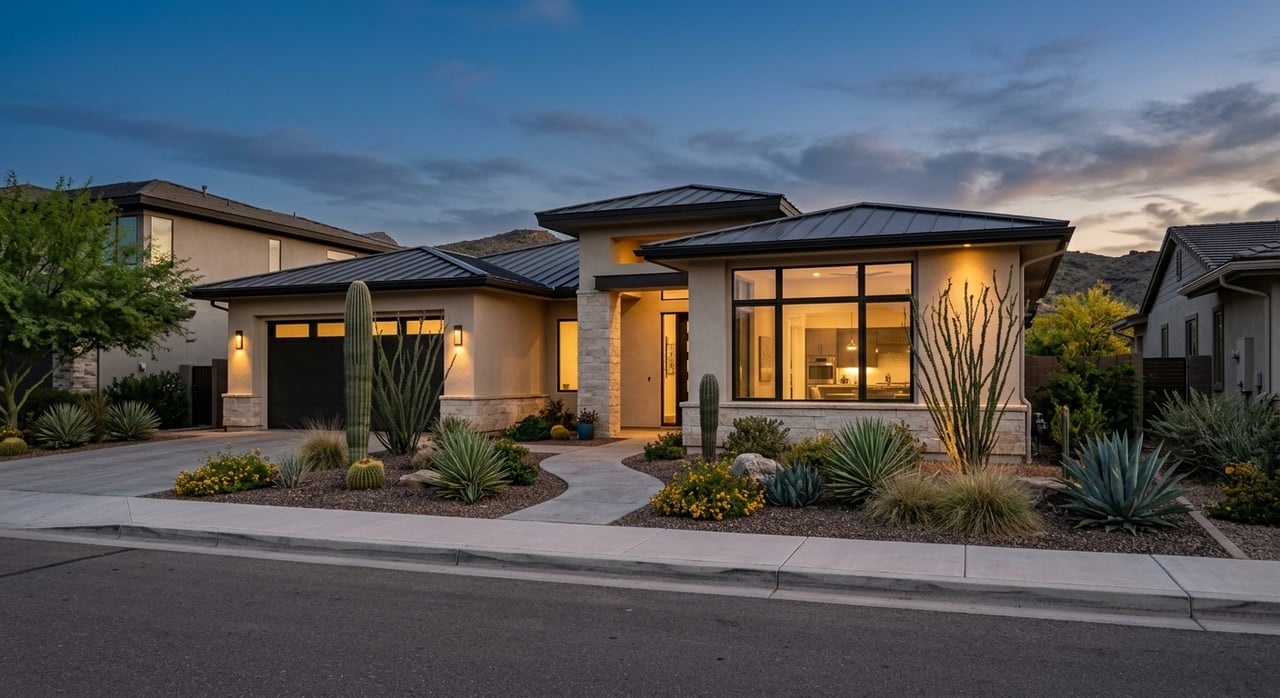
If you are drawn to Rio Verde, you are probably not just choosing a house. You are choosing a desert lifestyle, a level of privacy, and a daily rhythm that can feel very different from one property to the next. Whether you picture open acreage with room to spread out or a managed community with built-in amenities, the right fit comes down to how you want to live. Let’s break down what each option really offers in Rio Verde so you can make a confident decision.
Why Rio Verde Feels Different
Rio Verde sits along a rural edge shaped by Sonoran Desert views, open space, and Maricopa County planning rather than city development patterns. In the Rio Verde Foothills area, county planning has focused on preserving rural character, protecting scenic corridors along Rio Verde Drive, improving trail connections, planning for fire protection, and addressing water resources.
That setting is a big part of the appeal. It also means your property decision may involve more practical questions than it would in a more urban or fully serviced area. In some parts of Rio Verde Foothills, residents may rely on wells, private utilities, or hauled water instead of automatic city water service.
What Acreage Living Offers
For many buyers, acreage is the purest version of Rio Verde living. You get more separation from neighbors, more open sky, and more control over how the property functions day to day. If privacy, horses, or custom improvements matter to you, acreage often delivers the flexibility that managed neighborhoods cannot.
Maricopa County rural zoning helps explain why this lifestyle feels so distinct. Districts such as RURAL-190, RURAL-70, and RURAL-43 are intended to conserve farms and open land uses and discourage small-lot subdivision where public facilities are not reasonably available. In these areas, certain agricultural uses are permitted, and limited equestrian uses may be accessory to a single-family home.
Acreage can be a strong fit if you want:
- More privacy and elbow room
- Space for barns, outbuildings, or custom structures
- A property better suited to horses or land-based uses
- Greater independence in how the land is used and improved
- A quieter, more self-directed desert lifestyle
That freedom is the upside. The trade-off is that more responsibility stays with you as the owner.
What Acreage Buyers Need to Manage
Open land can be rewarding, but it usually asks more of you. On many acreage properties, you are not just evaluating the home. You are also evaluating the land, utilities, access, and long-term upkeep.
Water is one of the biggest examples. In Rio Verde Foothills, the water source may be a well, a private utility, or hauled water, depending on the property. That is not a small detail. It shapes your monthly routine, operating costs, and long-term planning.
Wastewater matters too. Where sewer lines are not available, septic systems are common. Arizona Department of Environmental Quality information notes that onsite wastewater systems are widely used across the state, which makes septic inspection and service history an important part of due diligence.
You should also expect the rural setting itself to influence daily life. Local planning documents note that groundwater resources are limited in some areas and long-term availability is unknown. They also reference dust and unpaved roads as part of the rural character conversation.
Key acreage due-diligence questions
- What is the water source for this property?
- Is there a septic system, and when was it last serviced?
- Does the zoning support horses, barns, or other intended uses?
- What are the road conditions and access like year-round?
- How much maintenance will the land, fencing, and infrastructure require?
What Community Living Looks Like
If you want a more structured lifestyle, organized community living can offer a very different experience. Instead of building your lifestyle around the land itself, you are often buying into a setting where amenities, recreation, and social spaces are already established.
In the Rio Verde area, Tonto Verde and Trilogy at Verde River show two different community models. Tonto Verde describes itself as a 55-plus golf community with more than 700 homes on large lots. Its resident-owned, professionally managed amenities include a clubhouse, restaurant, fitness center, heated pool, community park, pickleball courts, dog parks, a putting course, library, bocce court, and walking trail.
Trilogy at Verde River offers a resort-style community setting adjacent to Tonto National Forest. The community states that Verde River Golf & Social Club spans more than 850 acres and includes golf, dining, fitness, pools, tennis, pickleball, spa services, and outdoor recreation access.
Community living can appeal if you want:
- Less day-to-day land management
- More predictable maintenance routines
- Built-in amenities and recreation
- A more social and programmed environment
- An easier lock-and-leave lifestyle
For the right buyer, that convenience is the main value. You trade some of the open-ended freedom of acreage for a more managed and predictable setup.
Comparing Privacy And Convenience
The easiest way to frame the decision is this: acreage usually favors flexibility and privacy, while community living usually favors convenience and amenity access. Neither is better in a vacuum. The better choice depends on what you want to personally manage and what you would rather have packaged for you.
Here is a simple side-by-side view:
| Lifestyle Factor | Acreage Living | Community Living |
|---|---|---|
| Privacy | Typically higher | Usually more structured neighborhood setting |
| Property use flexibility | Often greater, subject to zoning | More defined by community layout and amenities |
| Maintenance responsibility | More owner oversight | Often less land-related oversight |
| Amenities | Created through the property itself | Built in and managed |
| Social environment | More independent | More organized and active |
| Infrastructure due diligence | Often more involved | Usually more straightforward |
If you love the idea of shaping a property around your own needs, acreage often makes sense. If you want your time focused more on recreation and less on land oversight, community living may be the better match.
Trail Access Matters On Both Sides
One thing many Rio Verde buyers share is a love of the outdoors. Trail access is a major draw whether you choose acreage or a planned community, but the experience is not the same.
Maricopa County says McDowell Mountain Regional Park offers more than 40 miles of trails for hiking, mountain biking, and horseback riding, with equestrians welcome on designated trails. The Tonto National Forest hiking system includes nearly 900 miles of trails. That kind of access gives the area strong appeal for active buyers.
On acreage, trail-oriented living often feels more personal and land-driven. You may value direct desert views, quieter surroundings, and a stronger sense of independence. In a managed community, outdoor access can feel more convenient because paths, recreation spaces, and amenity planning are already part of the neighborhood experience.
Which Buyer Type Fits Best?
If you are still deciding, it helps to think less about square footage and more about how you want your week to feel. The home matters, but your daily lifestyle matters more.
Acreage may suit you best if you:
- Want room for horses or rural improvements
- Value privacy over built-in social activity
- Are comfortable evaluating water, septic, and zoning details
- Prefer the lifestyle to come from the property itself
- See the land as something you want to steward long term
Community living may suit you best if you:
- Want amenities ready from day one
- Prefer a simpler maintenance rhythm
- Enjoy a more active neighborhood environment
- Want easier access to organized recreation
- Like the idea of locking and leaving with fewer land concerns
In Rio Verde, this is often not a luxury-versus-non-luxury decision. It is a lifestyle structure decision. The right answer comes from how much freedom, responsibility, and built-in convenience you want.
How To Make A Smart Rio Verde Choice
Before you commit, take the time to look beyond finishes and floor plans. In Rio Verde, two homes with similar price points can offer very different ownership experiences based on water setup, zoning, septic, trail access, and overall land responsibility.
That is especially true if you are considering horse property, custom acreage, or a privacy-focused desert estate. A careful review of infrastructure and intended use can protect both your lifestyle and your investment.
If you want help weighing acreage against community living in Rio Verde, a local advisor who understands rural property details can save you time and help you avoid expensive surprises. For a confidential consultation, connect with Clinton Miller.
FAQs
What is the main difference between acreage and community living in Rio Verde?
- Acreage usually offers more privacy, flexibility, and land-based lifestyle options, while community living usually offers more convenience, shared amenities, and less day-to-day land oversight.
What water questions should you ask about a Rio Verde acreage property?
- You should confirm whether the property uses a well, private utility, hauled water, or another water source, because Rio Verde Foothills properties do not always have automatic city water service.
Why is septic important when buying in Rio Verde?
- In areas without sewer lines, septic systems are common, so you should review the system type, maintenance history, and overall condition before you buy.
Are horses allowed on Rio Verde acreage properties?
- Some rural zoning districts in Maricopa County allow agricultural uses and limited equestrian uses accessory to a single-family home, so you should verify the zoning for the specific parcel.
What amenities can community buyers find near Rio Verde?
- Organized communities in the area may include amenities such as golf, dining, fitness centers, pools, pickleball, walking trails, parks, and other resident-focused recreation spaces.
How does trail access compare in Rio Verde?
- Both lifestyles can appeal to outdoor buyers, with access tied to nearby resources such as McDowell Mountain Regional Park and Tonto National Forest, but acreage often feels more independent while community access may feel more structured and convenient.