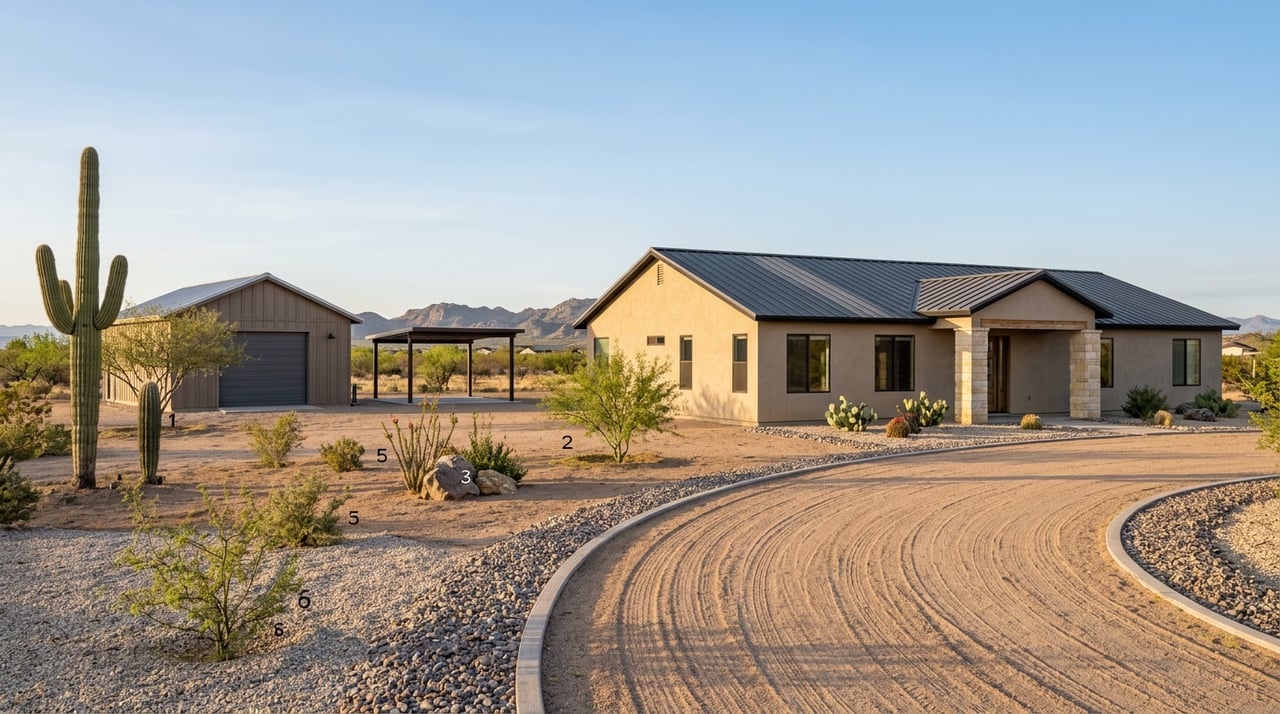
Craving room to breathe, direct trail access, and endless desert views without giving up greater Scottsdale? If so, acreage in Rio Verde might fit your life. You want clarity on where to look, how water and septic work, and what daily rhythms feel like on the edge of the Tonto National Forest. This guide breaks down the difference between the private Rio Verde community and the unincorporated Foothills, what you can do with your land, key utility checks, recreation highlights, and a practical buyer checklist. Let’s dive in.
Rio Verde at a glance
Rio Verde sits about 30 to 35 miles northeast of Scottsdale. The official census-designated place centers on a private, country-club setting, while the surrounding unincorporated Rio Verde Foothills offers more rural acreage and flexible uses. Distances and drive times vary with traffic, so plan accordingly as you compare neighborhoods. For orientation, review the Rio Verde overview and remember that parcel rules change block to block.
Two distinct lifestyle options shape your search:
- The private Rio Verde community has a fee-managed, club-focused atmosphere with larger lots by suburban standards and HOA rules. For membership and community details, start with the Rio Verde Country Club site.
- The unincorporated Foothills features 1 to 5 plus acre parcels, a lower-density feel, and varied land uses. You will see homes with barns, workshops, RV space, and wide outdoor living areas.
What acreage looks like here
In the Foothills and nearby rural fringes, 1 acre to several acres is common. You will find a mix of newer builds, classic ranch homes, and purpose-built equestrian setups. In the private Rio Verde community, lot sizes are generous, but HOA rules guide what you can and cannot do with the property.
How owners commonly use acreage here:
- Horses: private paddocks, small barns, and round pens are frequent. Nearby boarding and riding amenities support an equestrian lifestyle.
- Workshops: detached garages and hobby shops are a common selling point.
- RVs: on-site storage is typical, and some parcels allow occasional on-site use. Confirm rules before you plan long-term occupancy.
- Desert agriculture: with the right irrigation, you may see citrus or small fruit trees and desert gardens.
- Outdoor living: patios, view decks, and stargazing zones take full advantage of the open sky and mountain horizons.
Common features in local listings
When you scan property details, look for:
- Water source: private well with an Arizona Department of Water Resources registration, municipal connection if present, or hauled-water arrangements.
- Septic: most acreage relies on on-site wastewater systems. Ask for permits, maintenance records, and the required resale inspection report.
- Outbuildings: detached workshops, barns, tack rooms, and covered RV bays.
- Fencing and arenas: pipe or board fencing, turnout areas, and round pens.
- Access: note whether roads are paved or compacted dirt. Dirt segments can be rough after storms.
- Rules: check for HOA or CC&Rs. Many rural listings highlight “no HOA,” while others carry restrictions that affect animals, RVs, and exterior materials.
Water, septic and permits you must verify
Desert acreage brings freedom, but utilities deserve a careful look before you write an offer.
Water: wells and the new standpipe
- Private wells are common. Arizona requires every well to be registered, and specific rules can apply within Active Management Areas. Ask for the ADWR well registration number and well log. Start with the ADWR well FAQ to understand the basics.
- Hauled water is still part of the picture for some parcels. After a 2023 disruption, a permanent EPCOR-operated standpipe opened January 1, 2026 to serve qualified Rio Verde Foothills residents. If a property relied on hauled water, confirm current service, account setup, hours, costs, and whether a private well is an option. Review EPCOR’s announcement for context on the Rio Verde Foothills standpipe solution.
Septic: on-site wastewater rules
Most acreage homes use septic. Maricopa County requires design review, permitting, and inspections. Arizona also mandates a resale inspection and report for properties on on-site systems. Ask for the system type, permit history, pump and service records, and the most recent transfer report. The county’s ownership transfer guidance is here: Maricopa County Onsite Wastewater.
Permits, zoning and CC&Rs
Unincorporated parcels are regulated by Maricopa County. Building permits are required for new structures, and drainage standards apply. An HOA can impose stricter CC&Rs that affect animals, RVs, and exterior finishes. A county permit does not override private CC&Rs. Before you plan a barn, arena, workshop, detached apartment, or long-term RV occupancy, confirm uses with county staff and request CC&Rs in writing. Start with the county’s Construction Permit Information.
Access, utilities and safety
Acreage in this corridor sits close to public land and river access, so roads vary. Some segments are paved, while others are compacted dirt that can washboard or rut after monsoon storms. Factor your vehicle type and seasonal conditions into commute planning.
Utility providers differ by parcel. Confirm electric service, trash pickup, and broadband options at the address. Fixed wireless and satellite are common in rural pockets. Ask for recent bills to estimate monthly costs, especially if water is hauled.
Wildfire is a reality in the wildland-urban interface. Many neighborhoods participate in mitigation efforts and adopt defensible-space standards. Ask about response times, hydrant availability where present, and community wildfire plans. The state’s fire prevention and Firewise resources provide practical context: Arizona Department of Forestry and Fire Management.
Trails, river access and open desert
Outdoor access is a prime reason buyers choose Rio Verde. The Tonto National Forest’s Cave Creek Ranger District and the Verde River corridor sit right next door, placing equestrian staging areas, hiking and biking trails, and river launch points within easy reach. Explore the district overview on the Tonto National Forest site to get a feel for Box Bar, Needle Rock, and nearby reservoir areas.
Closer to the Scottsdale edge, McDowell Mountain Regional Park offers extensive hiking, mountain biking, and horse trails. Many acreage owners build a routine around dawn and dusk outings during summer, with longer rides and river time in shoulder seasons and winter.
Weather and daily rhythm
The Sonoran Desert’s seasons shape your schedule. Expect hot, dry springs and very hot summers, with a July to September monsoon window that brings afternoon and evening storms. Winters are mild, making mornings and evenings ideal for outdoor time. Monsoon downpours influence landscaping, erosion control, arena footing, and road maintenance. For monthly temperature and precipitation normals, review the Phoenix area climate data from the National Weather Service: 1991–2020 normals.
A quick buyer checklist
Save this list for your first call, tour, or offer.
- Water supply
- What is the source? Private well, municipal, or hauled water via standpipe. If a well exists, get the ADWR registration number and well log. If hauled, confirm account, hours, costs, and delivery logistics. Reference: ADWR well FAQ and EPCOR’s standpipe update.
- Septic
- Request the most recent inspection and pump records and the county’s required resale inspection report. Verify system type and age. Guidance: Onsite Wastewater Ownership Transfer.
- CC&Rs and HOA
- Get the documents before you tour. Some HOAs are age-restricted active-adult environments, and many have animal and RV rules. Confirm compatibility with your plans.
- Permitting and zoning
- Check the parcel’s zoning and whether your intended uses need permits or variances. Confirm building and drainage requirements with county staff: Construction Permit Information.
- Access and roads
- Clarify whether roads to the site are paved or dirt, who maintains them, and how monsoon season affects conditions. Adjust commute plans and vehicles as needed.
- Wildfire and emergency services
- Ask about local Firewise activity, defensible space, and response times. Confirm water availability for firefighting where relevant. Context: State fire prevention resources.
- Utilities and internet
- Identify electric and trash providers and confirm broadband options at the address. Ask for recent utility bills to estimate usage and costs.
- Lifestyle fit
- For horses, confirm shade, water for stock, footing, local boarding options, and nearby veterinary services. For workshops or home businesses, verify zoning, any needed Home Occupation permits, and parking or traffic limits.
What to request from the listing agent
- Parcel map and legal description
- Well registration and water-quality tests if applicable
- Septic permits, service records, and the resale inspection report
- HOA and CC&Rs, plus budgets and recent minutes if available
- Recent utility bills and, if hauled water, standpipe or delivery invoices
- Access and road maintenance agreements
- Copies of building permits and any disclosures on unpermitted work
The bottom line
Acreage in Rio Verde gives you space, quiet, and fast access to trails and river days. The tradeoff is doing your homework on water, septic, access, and rules so your land works the way you expect. When you align the right parcel with your lifestyle, the payoff is big sky, open desert, and room to build the life you want.
If you are ready to explore acreage with clear guidance on wells, septic, equine amenities, and permitting, reach out to Clinton Miller for a confidential consultation.
FAQs
Can I keep horses on Rio Verde acreage?
- Often yes on unincorporated parcels, but confirm county zoning and any HOA CC&Rs that set animal limits before you buy.
Do Rio Verde Foothills parcels require hauled water?
- Not always. Many parcels have private wells. Others now use an EPCOR-operated standpipe. Verify the specific water setup, account access, and costs for each property.
Is wildfire a major concern in the area?
- The corridor sits near the wildland-urban interface. Plan defensible space, know response resources, and consult local fire prevention programs.
How far is Rio Verde from Scottsdale and Phoenix?
- Expect roughly 30 to 35 miles to many Scottsdale locations, with total time varying by route and traffic. Check your exact start and end points for precise planning.