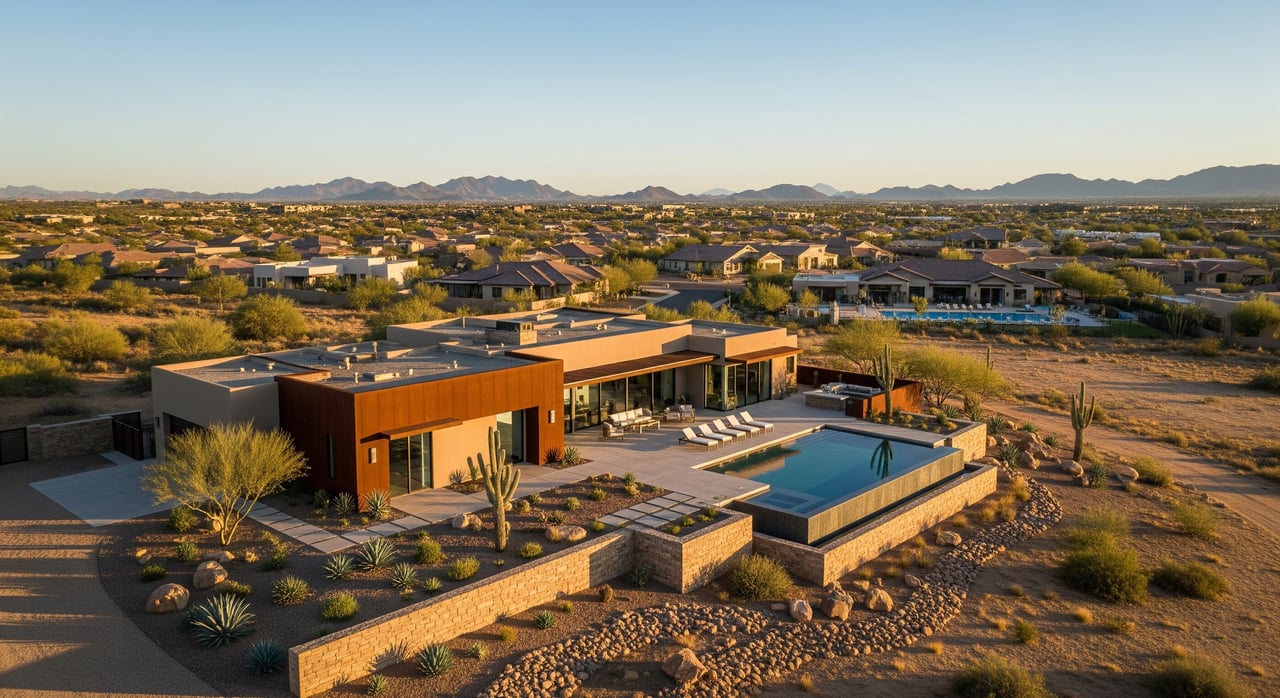
Thinking about trading a big Arizona sky for a gated community, or the other way around? If you are relocating to North Phoenix or nearby desert corridors, the choice between acreage and HOA living shapes your daily life, budget, and long-term plans. You want privacy and freedom without surprises, or convenience and predictability without losing the Sonoran feel. This guide walks you through the Phoenix realities, gives you a clear decision framework, and shares a due diligence checklist so you can buy with confidence. Let’s dive in.
Acreage vs HOA at a glance
Both options can be excellent in the north corridors of Phoenix, Desert Ridge, Anthem, Cave Creek, Carefree, and nearby unincorporated areas. Acreage tends to prioritize space, privacy, and land use flexibility. HOA communities prioritize convenience, amenities, and a consistent neighborhood look. Your best fit depends on how you weigh privacy, maintenance, rules, costs, and local environmental factors.
Privacy and land use
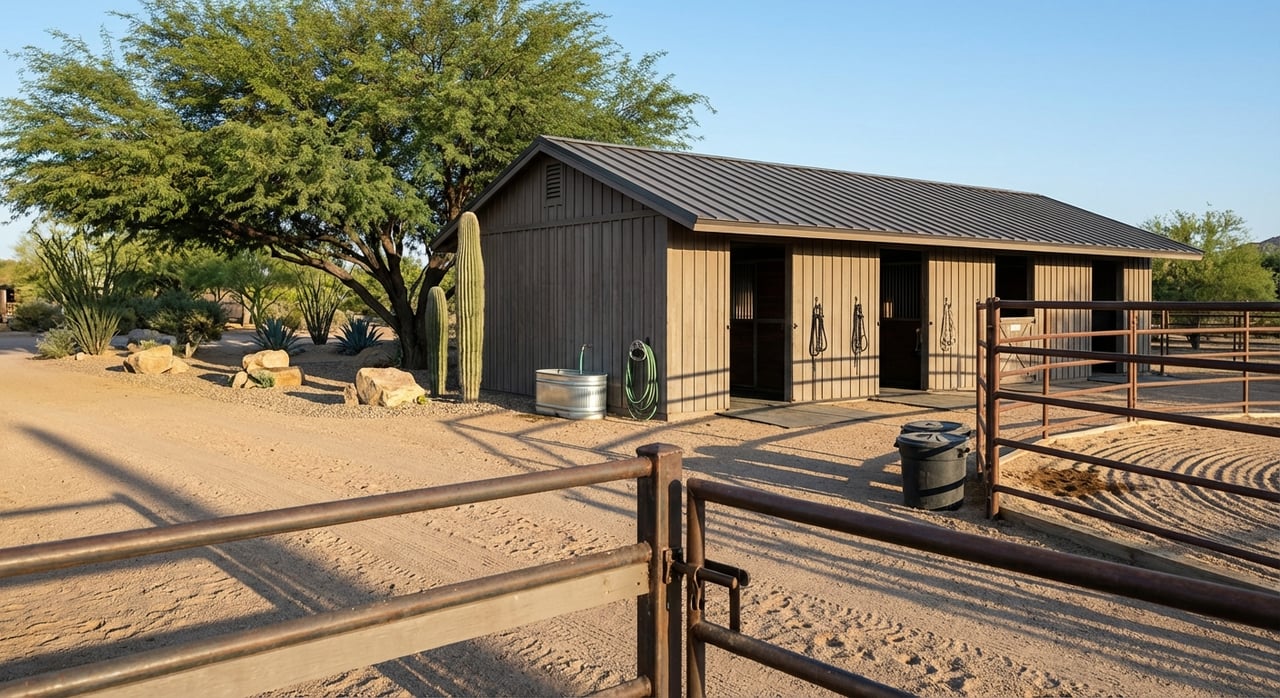
Acreage often gives you larger setbacks, distance to neighbors, and room for uses that are typically restricted in HOAs. You may consider multiple outbuildings, a workshop, certain animals, or a private guest structure. County zoning and permits still apply, so confirm what is allowed before you move forward.
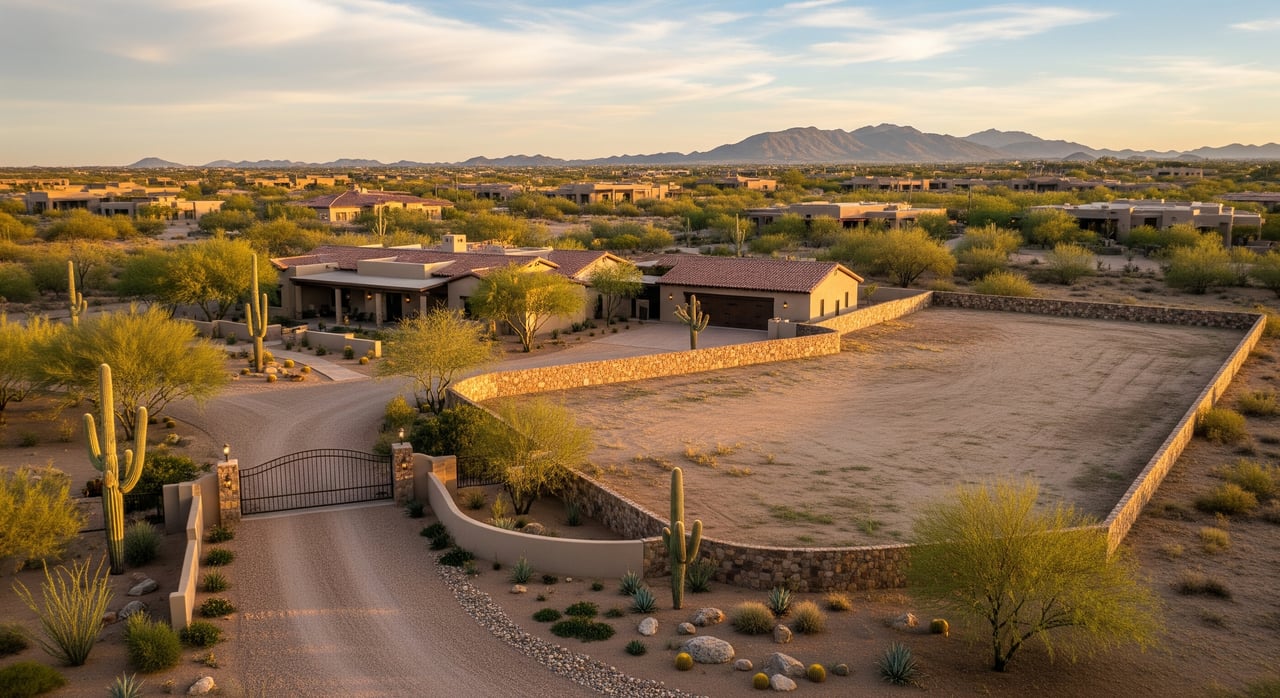
Desert scenery and views are a major draw. Lot orientation, washes, and terrain influence both privacy and your buildable area. Many acreage parcels also sit on unpaved or private roads, which can be dusty during storms and affected by seasonal flooding.
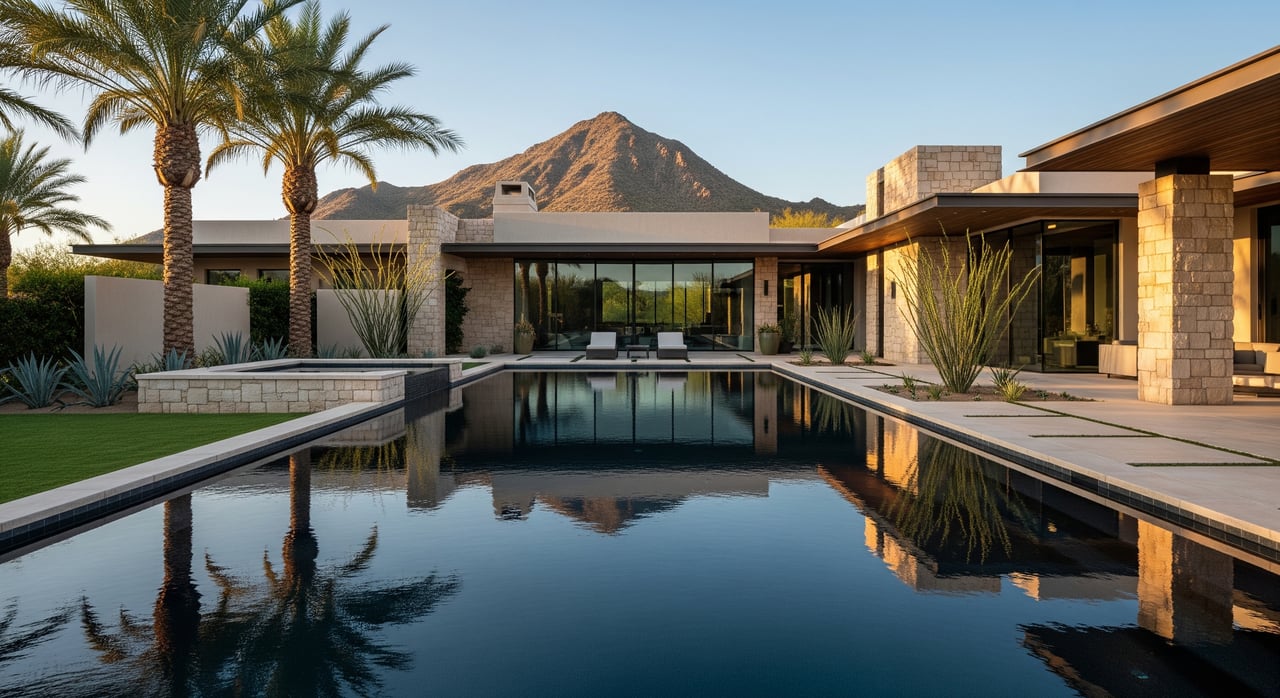
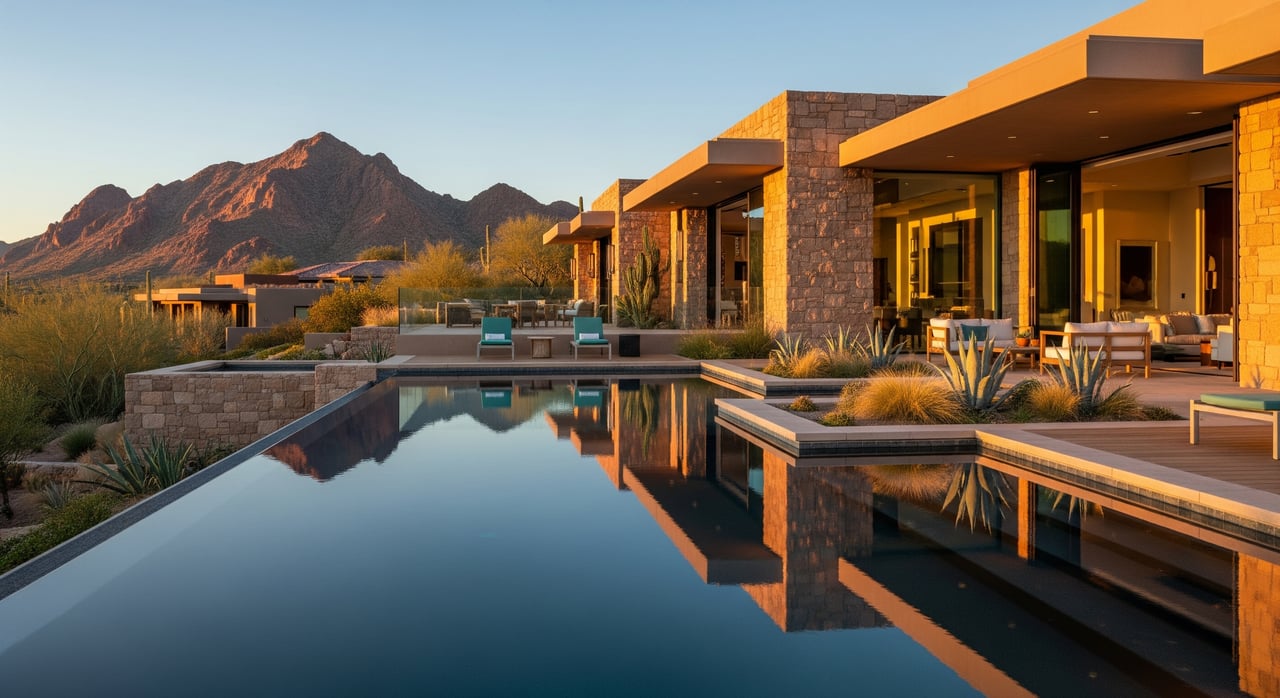
In HOA communities, lots are smaller and homes are closer together. You gain common landscaping and street maintenance, and many master-planned neighborhoods offer pools, parks, trails, and community centers. You trade some autonomy for a cohesive look and shared amenities.
Utilities and services
Service availability is one of the biggest Phoenix-specific differences.
- Electric: Most of the metro is served by established utilities. Rural lots may need power line extensions and easements. Confirm installation costs early.
- Water: Inside city limits and many planned communities, municipal water is common. Outside those areas, acreage may rely on private wells or water hauling. Arizona Department of Water Resources rules and the Phoenix Active Management Area affect well permitting and groundwater use.
- Sewer: Acreage often uses septic systems. Permits, inspections, and ongoing maintenance are your responsibility.
- Internet: High-speed options can be limited on rural parcels. Fixed wireless or satellite may be the fallback where cable or fiber is not available.
- Roads and trash: HOAs commonly coordinate trash and common-area care. On acreage, you may handle your own trash service and contribute to private road maintenance.
Rules and governance
HOAs are governed by recorded CC&Rs, bylaws, and rules enforced by the association and its management. Architectural review boards typically control exterior changes, paint colors, landscaping standards, and parking or RV restrictions. HOAs can levy dues, fines, special assessments, and place liens for nonpayment.
Acreage may have fewer formal restrictions, but it is rarely a free-for-all. Deed restrictions, conservation easements, or county overlay districts can still limit use. The key is to obtain and review all recorded documents early, then align your plans with what is actually allowed.
Costs and resale
Upfront prices vary widely across both acreage and HOAs. Amenity-rich communities can command premiums, and acreage often costs more per parcel for privacy and land. The bigger difference usually shows up in ongoing costs.
- HOA costs: Regular dues and predictable shared maintenance. Occasionally, special assessments occur.
- Acreage costs: More variable. You may have quiet years, then larger expenses like a septic repair, well work, or road grading. Some parcels carry higher insurance if they are farther from fire services.
On resale, planned communities with amenities often draw a broad buyer pool. Acreage can be less liquid, especially on parcels with irregular shapes, complex easements, or water uncertainties. Clear title, clean access, and reliable utilities help both value and marketability.
Safety, environment, and climate
Phoenix summer cooling is a real line item. If you plan a larger home or multiple outbuildings on acreage, model energy use carefully. Water scarcity is a long-standing issue in Central Arizona, and groundwater is regulated. Confirm water sources and well details early.
In the foothills and desert rim areas near Cave Creek and Carefree, wildfire risk can be higher. Defensible-space landscaping and insurance availability matter. Monsoon storms can cause flash flooding, and washes can limit where you build or require drainage mitigation.
Due diligence checklist
Use this step-by-step list to protect your investment.
Pre-offer
- Verify service boundaries for water, sewer, trash, fire protection, and school district assignments.
- Confirm zoning and permitted uses for the parcel.
- Obtain recorded CC&Rs, plats, and any deed restrictions.
In contract
- HOA homes: Request CC&Rs, bylaws, rules, recent meeting minutes, financial statements, reserve study, assessment history, pending litigation, and enforcement records.
- Acreage wells: Get the well log, pump test, water quality test, depth and yield details, and registration. Ask about nearby wells and drawdown trends.
- Septic: Review permits, system age and condition, percolation test results, and capacity.
- Utilities: Confirm providers, existing service lines, and any required extensions and costs.
- Roads and access: Determine public or private status, road maintenance agreements, and right-of-way easements.
- Insurance: Request quotes for homeowners coverage and any wildfire or high-wind endorsements.
- Environmental: Check floodplain status, presence of washes, slope and erosion risks, and dust concerns.
- Title and easements: Identify any utility, access, or conservation easements that affect where you can build.
- Home and systems: Order a standard home inspection plus septic, well, roof, and cooling capacity checks.
- HOA compliance: If you plan outbuildings, RV storage, or exterior changes, obtain written architectural pre-approval when required.
Negotiation tips
- Acreage: Use well and septic results, plus private road liabilities, in negotiations.
- HOA: Consider reserve funding, special assessment risk, or pending litigation as leverage or walk-away signals.
Decision framework
Answer these questions and assign 1 to 3 points for each match with your priorities.
- Land autonomy or managed neighborhood aesthetic is most important?
- Do you want municipal water and sewer, with minimal private system maintenance?
- Are you prepared for surprise infrastructure costs like power extensions, road work, well or septic?
- Is quick resale and broad buyer appeal critical?
- Do you prefer predictable fees or are you comfortable with variable expenses?
- Do you require specific outdoor uses like a workshop, RV space, animals, or multiple structures?
- Are community amenities and a defined social structure important to you?
- How sensitive are you to wildfire risk, emergency response times, and cooling costs?
- Is high-speed internet and reliable utility service essential for work?
Tally your points. If autonomy, private systems, and flexible use score highest, acreage may fit. If amenities, predictability, and resale depth score higher, an HOA community may be the better move.
Local scenarios
- The workshop owner: You plan a detached shop, RV storage, and space for animals. County zoning allows your uses, and you are ready to manage a well and septic. Acreage near Cave Creek or Desert Hills likely fits.
- The amenity seeker: You want trails, community pools, and consistent streetscapes with professional management. You value predictable monthly costs over occasional big-ticket surprises. A master-planned HOA in North Phoenix, Anthem, or Desert Ridge is a strong match.
Making your choice
The right answer in Phoenix’s north corridors is not one size fits all. Consider the land and lifestyle you want, your tolerance for private systems, and the tradeoff between autonomy and convenience. Your due diligence will make the difference between a good fit and a great one.
If you want a pragmatic read on zoning, water or septic, wildfire exposure, and resale paths for both acreage and HOA homes, connect with a local specialist who lives the lifestyle and understands the technicals. For discreet, boutique guidance across North Scottsdale, Cave Creek, Carefree, and the North Phoenix corridors, reach out to Clinton Miller for a confidential consultation.
FAQs
How do HOA dues compare to rural maintenance costs in Phoenix?
- HOA dues are regular and predictable, while rural costs can be lower in some years but include occasional larger expenses like well, septic, or private road work. Model five-year totals, not just monthly averages.
What HOA rules should I expect before buying in North Phoenix communities?
- You can expect CC&Rs with architectural review for exterior changes, landscaping standards, and parking or RV restrictions. Associations may levy fines, assessments, and liens for nonpayment.
Is a private well a reliable water source in the Phoenix Active Management Area?
- Well performance varies by location. Confirm registration, review well logs, and obtain a pump and water quality test. Ask about nearby wells and groundwater trends before you commit.
Do acreage properties near Cave Creek and Carefree have higher insurance premiums?
- They can, especially where wildfire exposure or distance to fire services is higher. Request quotes early, including any needed wildfire or high-wind endorsements.
What legal or title issues should I check on acreage parcels in Maricopa County?
- Look for recorded easements, access rights, conservation restrictions, and any CC&Rs. A thorough title search and, when appropriate, a survey help protect buildable area and future plans.