Looking for real privacy in Paradise Valley without sacrificing light, views, or style? You are not alone. In this town of large lots and desert sun, owners value designs that feel secluded, calm, and intentional. In this guide, you will see how setbacks, walls, gates, courtyards, and water-wise landscaping work together to deliver everyday seclusion that also supports resale. Let’s dive in.
Why Paradise Valley is built for privacy
Paradise Valley’s zoning favors space. The common R‑43 district sets a minimum 1‑acre lot with typical setbacks of 40 feet in front, 20 feet on the sides, and 40 feet at the rear. Those dimensions create a natural buffer that you can shape into true seclusion when you plan the site well. You can review the specific rules in the Town’s height and area regulations for your parcel type to confirm what applies at your address (Paradise Valley Article 10).
The climate also shapes smart privacy design. Paradise Valley sits in the Sonoran Desert, with long hot summers, mild winters, and low annual rainfall. Phoenix-area normals show roughly 7.2 inches of rain per year, which pushes you toward heat-tolerant materials, shade strategies, and water-wise plants (NWS climate normals). When your privacy plan respects the desert, it looks better and costs less to maintain.
Site planning that protects your peace
Use setbacks and orientation
Start by placing “public” functions toward the street and keeping your primary living and outdoor spaces deep on the lot. Service drives, guest parking, and garage-forward massing near the front reduce casual views into the heart of your home. Larger courtyards, pools, and main patios work well in the interior of the site. When you design massing, keep the Town’s height planes and setback geometry in mind because they control where taller elements can sit (Article 10 reference).
Arrival courts and single-entry gates
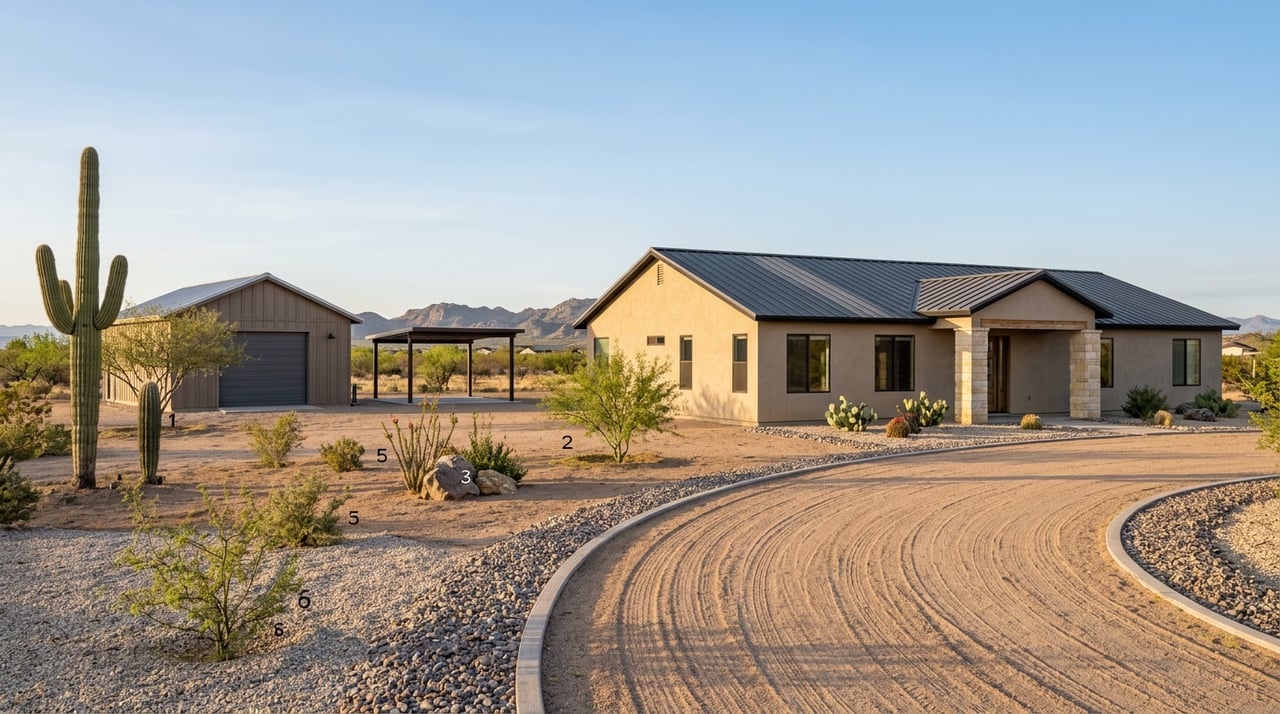
A long, meandering drive that ends in a recessed arrival court creates distance and calm. A single controlled entry point can simplify access and reduce passersby sightlines. If you plan an automated gate or call system, note that the Town outlines technical and emergency-access requirements, including a key switch or Knox arrangement, plus sight-triangle clearances at approaches. It is smart to review the Town’s building and site regulations before you design the gate structure and hardware (Building/Site Regulations).
Courtyards and inward-facing plans
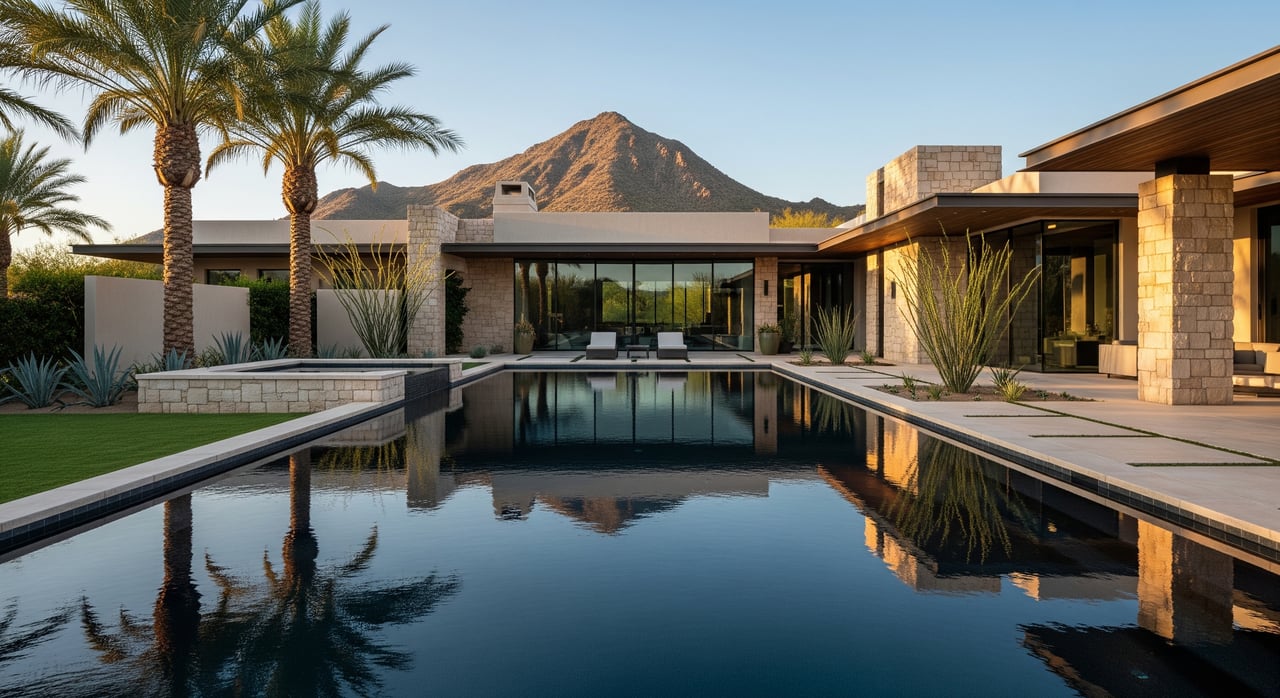
Courtyard and U-shaped homes are a proven way to enjoy indoor-outdoor living without giving up privacy. These plans wrap private outdoor rooms with the home itself, shielding you from the street while still capturing daylight and long views where they matter. Regional examples show how courtyards create shaded microclimates for year-round use while keeping daily life off-stage (courtyard case study). The result is quiet seclusion with fresh air and natural light.
Perimeter walls that comply and elevate design
Know the height rules
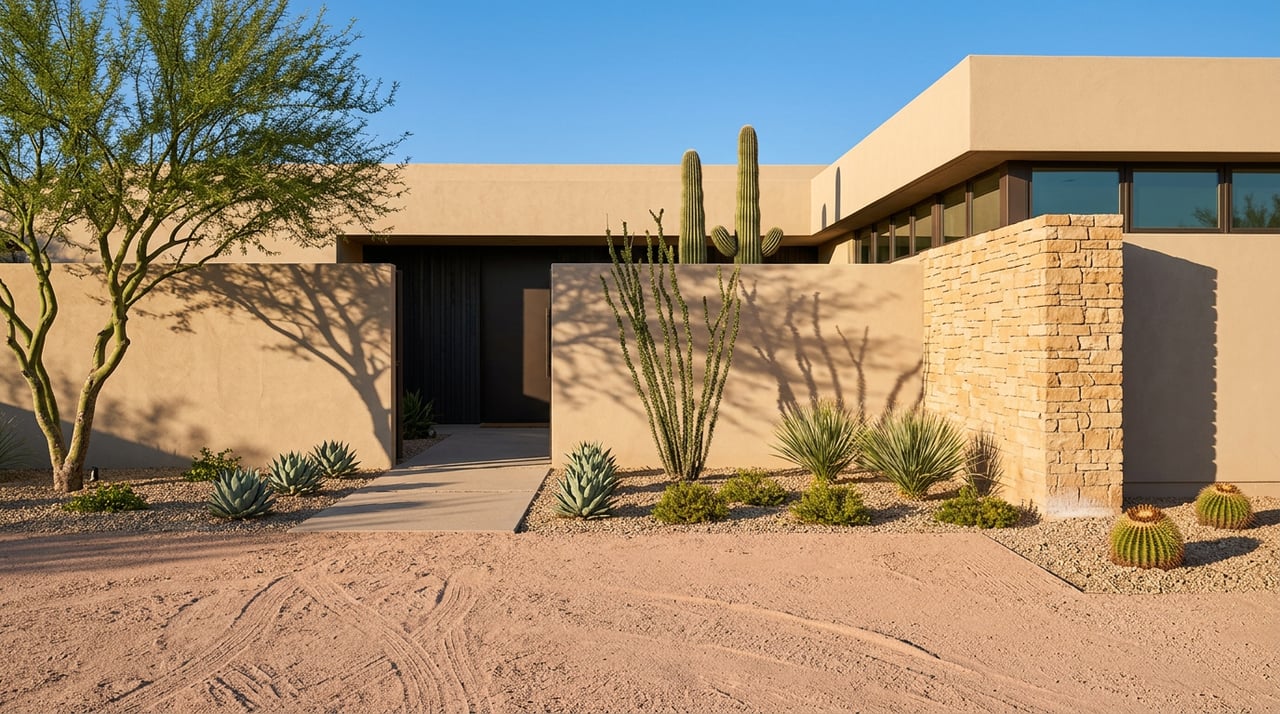
Paradise Valley regulates perimeter walls and view fences by location and street type. As a general frame, walls along most streets top out around 6 feet, while front-yard sections between roughly 10 and 40 feet from the property line are often limited to about 3 feet. In some cases adjacent to major arterials or non-residential edges, heights up to 8 feet are allowed. Confirm the details for your street classification and yard portions in the Town’s wall and view fence standards (wall and fence standards).
Meandering alignments and property-line options
“Meandering” wall alignments help meet average setback requirements while letting you place taller sections where allowed. On sides or rears not adjoining rights-of-way, property-line placement is often possible. This flexibility lets you tune privacy and views with both the wall layout and the planting in front of it. Always check site-specific setbacks before finalizing a layout (wall and fence standards).
Finish matters for resale
The Town expects walls visible from the right-of-way or open space to complement the home. In many cases, compatible finishes like stucco and paint are required. That standard is one reason high-end estate walls in Paradise Valley feel integrated and permanent rather than purely functional. A well-detailed wall reads as architecture, which can support long-term value (wall and fence standards).
Screens that filter views, not light
You can keep sightlines out while letting soft light in. Perforated metal screens, patterned brise-soleil, and other filter elements reduce glare and direct views into private rooms. Inside, clerestory windows and high transoms bring daylight above eye level while preserving privacy at seated heights. Used together with courtyards, these strategies create luminous interiors without the fishbowl effect.
Water-wise landscape that screens year-round
Start with low-water plant lists
In a low-rainfall climate, plant selection drives both privacy and operating costs. Arizona’s Low Water Use and Drought-Tolerant Plant Lists are the starting point for a smart estate palette, from shade trees and evergreen shrubs to cacti and accents. Matching species to hydrozones and exposure is key to performance and long-term costs (ADWR landscape guidance).
Layer for depth and coverage
A layered approach creates privacy without a monotone hedge. Place lower, non-invasive shrubs and grasses closest to the property line, evergreen shrubs in the mid-row for year-round screening, and taller shade trees deeper in the setback. Many Sonoran Desert trees are semi-deciduous, so combining species and adding vines on trellises where space is tight helps maintain coverage across seasons. The University of Arizona Cooperative Extension has practical guidance on vines and evergreen picks for narrow screens and trellis walls (UA Extension on vines and screening).
Smart irrigation and maintenance
Desert estates can be both green and efficient when you plan irrigation well. Drip systems, smart controllers, and grouping plants by water needs keep usage in check. Large hedges and mature screening trees add pruning, pest, and litter tasks, so budget for upkeep and choose species with known performance in your microclimate. ADWR’s resources help you weigh these tradeoffs before you plant (ADWR landscape guidance).
Account for defensible space
Privacy grows best alongside safety. The Town highlights defensible-space practices that include removing dead grasses and maintaining vegetation close to structures. If you are planning dense planting near the house, consider spacing, species, and ongoing maintenance with home ignition zones in mind. Start with the Town’s Fire Prevention guidance for local context (PV Fire Prevention).
Privacy without losing your view
Many buyers pay a measurable premium for quality mountain or skyline views. Dense near-field screening that blocks those long-distance vistas from primary rooms can work against value. The best designs usually block close-in sightlines while preserving elevated or distant views through framing and selective thinning. For background on how markets value views, see spatial hedonic research that quantifies the premium in many settings (view premium research).
Resale upside and buyer expectations
Privacy consistently ranks high for luxury buyers. In an affluent market like Paradise Valley, where typical home values are in the multi-million range, well-executed and low-maintenance privacy features signal quality and care. Courtyards, inward-focused plans, compliant perimeter walls, and layered desert landscaping all show up in lifestyle-forward listings. When these features are planned with water, maintenance, and views in mind, they tend to resonate with discerning buyers.
Permits and next steps in Paradise Valley
Before you build or modify permanent features, take a few practical steps:
- Review the Town’s height and area regulations to confirm setbacks, height planes, and any hillside triggers for your lot (Article 10).
- Check wall and view fence standards for height, measurement rules from exterior grade, and front-yard limits (wall and fence standards).
- Confirm permit needs and submittals with the Town’s permits and development page, and verify requirements for your specific address (PV permits).
- For gates and access control, align your design with the Town’s emergency-access and technical requirements, including key switch/Knox details and sight triangles (Building/Site Regulations).
- Coordinate planting with irrigation plans and consider defensible-space practices near structures (PV Fire Prevention).
If you want a confidential review of privacy-forward features before you list or buy, connect with Clinton Miller for local insight and a clear plan.
FAQs
How tall can my front wall be in Paradise Valley?
- It depends on your street classification and where you are within the front yard; sections roughly 10 to 40 feet into the front yard are often limited to about 3 feet, with other stretches commonly up to 6 feet, and up to 8 feet in certain arterial contexts; verify specifics in the Town’s wall and view fence standards and your site setbacks (standards reference).
What plants work for fast privacy in the Sonoran Desert?
- Start with low-water trees and evergreen shrubs from Arizona’s approved lists and use vines on trellises for narrow spots; combine species for year-round coverage and match them to irrigation zones (ADWR guidance, UA Extension).
Do automated driveway gates need special approval in Paradise Valley?
- Yes; the Town outlines technical and emergency-access requirements, including a key switch or Knox access and sight-triangle clearances, and gate projects typically go through permitting (Building/Site Regulations).
Will a dense hedge reduce my mountain view value?
- Often yes; research shows views can carry a measurable premium, so use layered or partial screening that preserves distant vistas from primary rooms when possible (view premium research).
How do courtyards add privacy without darkness?
- Courtyards and U-shaped plans wrap private outdoor rooms that block street views while allowing daylight and framed long views, especially when paired with high clerestory windows and shaded patios (courtyard example).