If you want a home that feels like a private retreat without giving up access to dining, golf, and desert scenery, Paradise Valley stands apart. This is a town shaped by space, mountain views, and a lifestyle built around outdoor living. In Paradise Valley Estates, that combination can feel especially compelling when you value privacy, design, and everyday convenience. Let’s dive in.
Why Paradise Valley Feels Resort-Like
Paradise Valley is a small desert town of about 12,774 people spread across 15.4 square miles. The setting is defined by Camelback Mountain to the south, the Phoenix Mountain Preserve to the west, and the McDowell Mountains to the east.
That geography matters because it shapes how you live day to day. With 294 sunny days per year, the town naturally supports patios, pools, mountain-view entertaining, and an outdoor rhythm that starts early and often stretches into the evening.
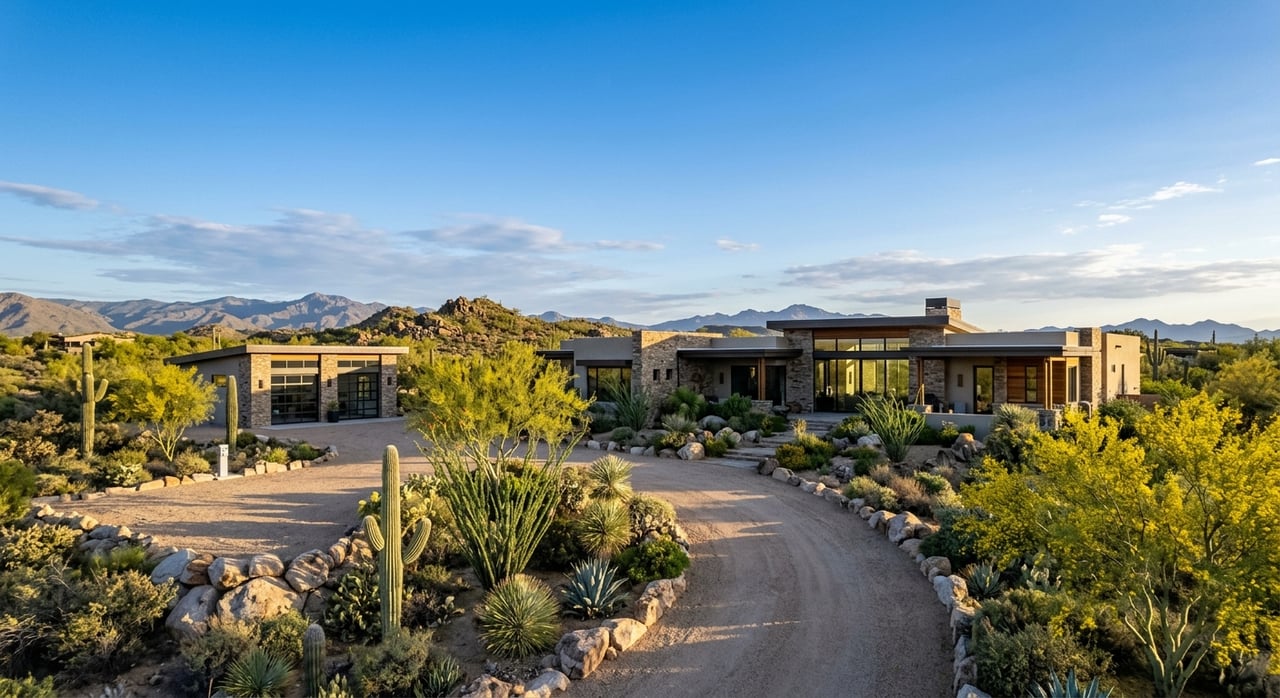
The town’s planning vision also plays a major role. Paradise Valley is intended to remain primarily one-acre residential, with limited government, natural open space, and an estate-style feel that sets it apart from denser parts of the Valley.
How Estate Living Is Protected
One reason Paradise Valley feels private is simple: the town is planned that way. Its General Plan emphasizes a primarily owner-occupied, low-density residential character, and in most areas, the standard is a minimum of one acre per residence.
Most of the town is zoned for single-family use, with one home per lot. The Residents Guide notes that much of Paradise Valley is zoned R-43, which generally means lots of at least one acre.
That framework helps preserve space between homes and supports the calm, estate-like character many buyers want. It also means the town is not trying to be a dense retail or nightlife district. It is, first and foremost, a residential community with a strong sense of place.
Design Standards Shape The Experience
In Paradise Valley, design review is part of daily life, not an afterthought. The planning division oversees subdivision plats, lot splits, zoning compliance, and Special Use Permits, while hillside construction and remodeling can involve additional review for lighting, walls, fences, landscaping, and lot disturbance.
For you as a buyer, that can translate into a more cohesive visual environment. Streetscapes, view corridors, and the relationship between homes and the land tend to feel more intentional because the town places real importance on aesthetics and natural open space.
Privacy Comes In Different Forms
Privacy in Paradise Valley does not depend on one single neighborhood pattern. Some properties enjoy privacy through lot size and setbacks, while others are part of gated enclaves identified by the town, including Hidden Paradise, Cheney Estates, Desert Jewel Estates, Montelucia, and Mountain Shadows Resort.
That does not mean every area is gated. It does show, however, how strongly privacy and enclave living contribute to the town’s identity.
Resort Amenities Are Part Of Everyday Life
Paradise Valley offers something many luxury buyers want but few communities deliver this well: residential calm paired with true resort infrastructure. According to the town, Paradise Valley is home to 9 resorts and 3 golf courses.
The town’s own planning documents describe residents and visitors enjoying fine dining, golf, tennis, spa offerings, and luxury hotel accommodations. In practical terms, that means resort-style experiences are not a special occasion here. They are woven into the local lifestyle.
Dining, Spa, And Pool Culture
Sanctuary Camelback Mountain is one of the clearest examples of this crossover between hospitality and home life. Set on 53 acres of desert landscape, the property includes manicured grounds, gardens, pools, and multiple dining options with views over Paradise Valley.
JW Marriott Scottsdale Camelback Inn Resort & Spa brings a similar rhythm, with heated outdoor pools, garden terraces, desert trails, outdoor living spaces, and a spa that includes a thermal wellness circuit, plunge pool, lounges, and private treatment rooms. It also includes Camelback Golf Club, which reinforces how dining, wellness, and recreation often intersect here.
Mountain Shadows adds a more contemporary expression of the same idea. Its dining and amenity spaces include scenic patios, mountain views, pool settings, a living room lounge, and The Short Course, an 18-hole par-3 course.
Outdoor Living Fits The Desert Setting
Paradise Valley’s appeal is not only about homes and resorts. It is also about the daily feel of the landscape. The General Plan emphasizes open space, mountain views, and low-impact recreation such as walking, hiking, biking, and horseback riding.
That focus helps preserve what draws many people here in the first place. You are not just buying square footage. You are buying a setting where the desert remains visible and where views are treated as part of the lifestyle.
Camelback Mountain Sets The Tone
Camelback Mountain is one of the defining landmarks of the area. The City of Phoenix describes it as one of the nation’s top hiking destinations, with trailheads open from sunrise to sunset and limited parking.
For many buyers, the value of Camelback goes beyond the hike itself. It shapes the visual identity of Paradise Valley and gives the town a strong sense of place that is hard to replicate elsewhere in the region.
The Desert Day Has Its Own Rhythm
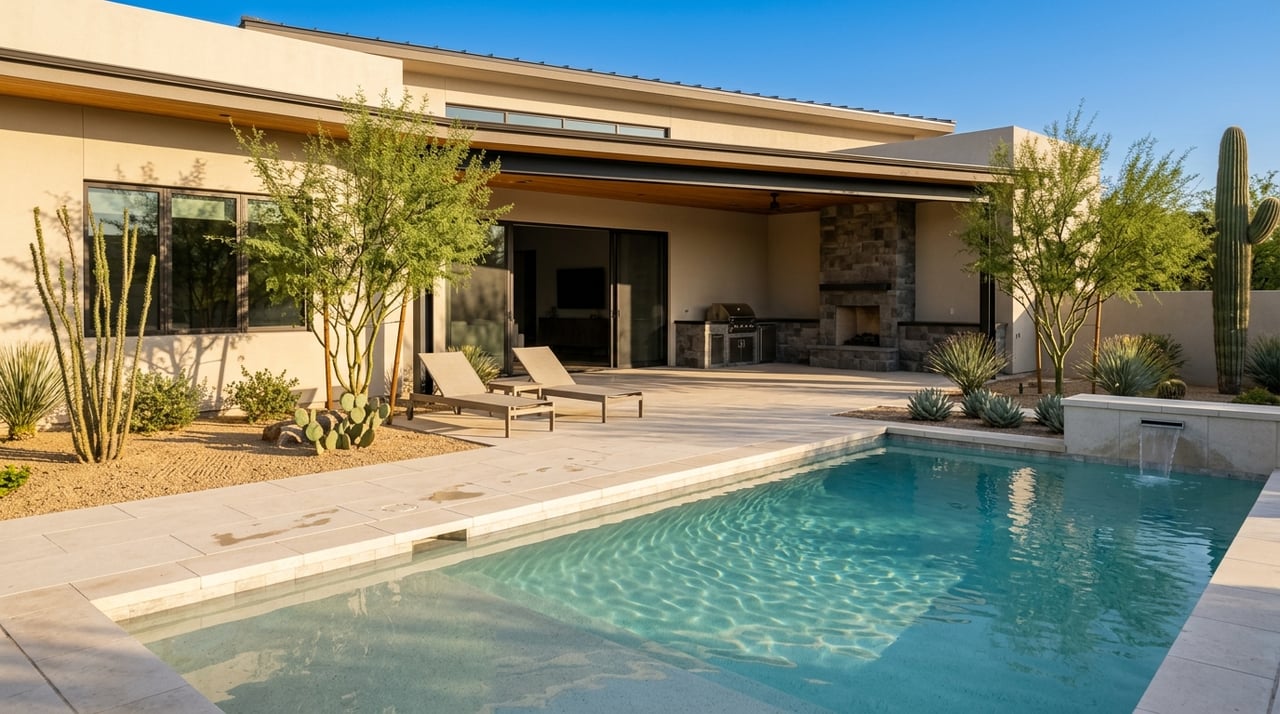
With abundant sunshine and low annual rainfall, outdoor spaces in Paradise Valley tend to work hard. Pools, shaded patios, fire features, and outdoor dining areas are not just aesthetic upgrades. They match the climate and the way people actually use their homes.
The tradeoff, of course, is summer heat. In the warmer months, many people shift outdoor time to early morning or evening, which is part of the natural rhythm of desert living.
Seclusion Without Isolation
A common misconception is that privacy means being far from everything. In Paradise Valley, the appeal is often the opposite. You can enjoy a quiet residential setting while staying close to dining, shopping, culture, and recreation in nearby Scottsdale and Phoenix.
Mountain Shadows notes that the Phoenix Mountain Preserve trail system is about 10 minutes away and includes more than 50 miles of hiking and mountain biking trails. Its materials also place Old Town Scottsdale, Scottsdale Fashion Square, and other amenity hubs within short reach.
That balance is a major reason buyers continue to prioritize Paradise Valley. You get a strong sense of retreat, but daily convenience is still part of the package.
What Buyers Often Value Most
When you look at Paradise Valley through a buyer’s lens, a few themes rise to the top again and again:
- Larger lot patterns and low-density planning
- Mountain views and open-space protection
- Spa, dining, and golf amenities nearby
- Patio-oriented indoor-outdoor living
- Privacy through lot size, design standards, or gated enclaves
- Quick access to Scottsdale and Phoenix amenities
These are not trends layered onto the town after the fact. They are tied to the way Paradise Valley has been planned and preserved over time.
Why This Lifestyle Appeals To Luxury Buyers
For many luxury buyers, resort-style desert living is not about constant activity. It is about ease, privacy, and having options close at hand. You may want a peaceful home base during the week, then enjoy golf, dining, spa time, or mountain trails on your own schedule.
That flexibility is part of the draw. Paradise Valley supports a quieter residential experience while keeping many of the amenities of a destination market nearby.
For buyers who care about land, setting, and long-term value in the overall feel of a community, that distinction matters. A town designed to remain low-density and primarily residential tends to offer a different ownership experience than areas built around higher intensity growth.
How Clinton Miller Helps You Navigate It
When you are evaluating luxury desert property, lifestyle is only one part of the decision. You also want clear guidance, local context, and a steady hand through the details that affect privacy, usability, and long-term fit.
That is where a boutique advisor can make a real difference. Clinton Miller brings a direct, high-integrity approach to luxury desert real estate, with the local market perspective and discretion many buyers expect when searching for a high-value home in the Paradise Valley area.
If you are exploring resort-style desert living in Paradise Valley Estates or nearby luxury communities, Clinton Miller can help you evaluate the options with clarity and confidence.
FAQs
What makes Paradise Valley feel different from nearby Scottsdale or Phoenix?
- Paradise Valley is planned as a primarily low-density, one-acre residential town with strong attention to open space, mountain views, and estate-style living.
What does resort-style living in Paradise Valley usually mean?
- In Paradise Valley, resort-style living often refers to a mix of private residential living with close access to spas, golf, fine dining, pools, patios, and mountain-view outdoor spaces.
Are all Paradise Valley neighborhoods gated?
- No. The town maintains a map of gated communities, but not every neighborhood is gated. Privacy often comes from lot size, setbacks, and the town’s low-density development pattern.
What outdoor activities are common in Paradise Valley?
- The town emphasizes low-impact recreation such as walking, hiking, biking, and horseback riding, with major access to landmarks like Camelback Mountain and nearby trail systems.
How does the climate affect daily living in Paradise Valley?
- With 294 sunny days per year and low rainfall, outdoor living is a major part of the lifestyle, though summer heat often shifts activity to mornings and evenings.
Is Paradise Valley mainly a resort area or a residential town?
- It is best understood as an estate community with resort-level amenities. The town’s planning and zoning are focused on preserving a primarily residential character rather than creating a dense commercial district.