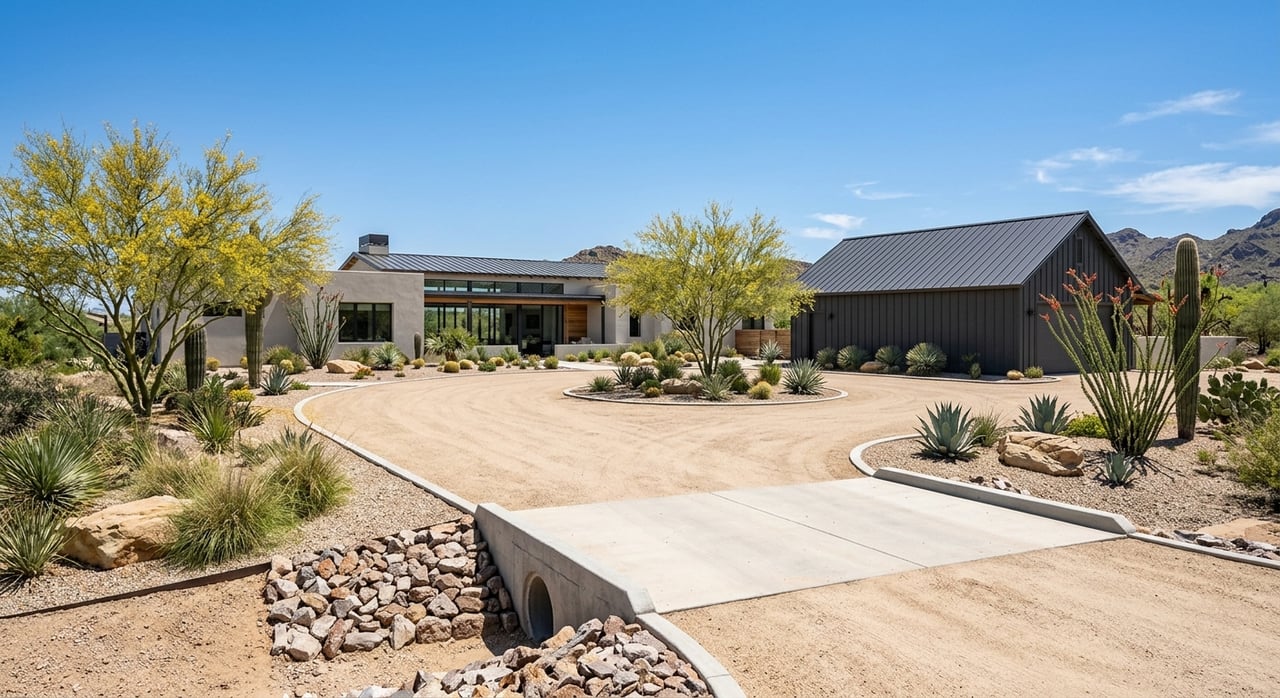
If you are thinking about selling acreage in Rio Verde, you are not just selling a home site. You are often selling a parcel with zoning questions, access issues, utility details, and improvements that buyers will examine closely. The good news is that when you prepare these details before you list, you can reduce surprises, build buyer confidence, and position your property more effectively. Let’s dive in.
Why Rio Verde Acreage Needs Extra Prep
Acreage sales in Rio Verde usually involve more due diligence than a typical suburban home sale. Buyers often want to know how the land is zoned, whether horse facilities fit current rules, how access works, and what utilities are actually available.
In Maricopa County, rural zoning is designed to conserve farms and open land and to discourage small-lot subdivision where services like water, sewage disposal, and parks are not readily available. That means your property may be evaluated as a land-use parcel as much as a residential property, especially if it includes barns, corrals, arenas, or open acreage beyond the immediate homesite. According to the Maricopa County zoning ordinance, those details can affect how buyers view value and risk.
Confirm Zoning and Current Use
One of the first things you should clarify is your zoning district and whether the current use of the property fits that zoning. Buyers may ask if the parcel is being used as ordinary residential property, for rural accessory purposes, for agricultural use, or under some form of special-use history.
This is especially important for horse properties. Under the current county ordinance, public equestrian use that is accessory to a single-family residence is limited to boarding up to five horses and must meet district conditions. If the use cannot meet those conditions, a special use permit may be required. The ordinance also treats public riding and boarding stables as a separate special-use category, with animal housing required to be set back at least 100 feet from all property lines, as outlined in the county ordinance.
If your property includes a barn, corrals, arena, or boarding setup, it helps to know exactly how those improvements fit the rules before your listing goes live. Maricopa County also notes that property history research can reveal permits, violations, zoning cases, special uses, and legal nonconforming records through its property history guidance.
Verify Boundaries Before Marketing
Boundary questions can quickly slow down an acreage sale. For that reason, one of the smartest steps you can take is confirming the legal description and understanding where the parcel lines actually are.
The county states that the Assessor's Parcel Viewer is useful for orientation, but parcel dimensions shown there are not authoritative. If your parcel is in a platted subdivision, the recorded plat is the authoritative source for dimensions. If it is not, a survey is needed for exact dimensions, and the deed should be checked for the legal description. The county also says parcel boundaries shown online are illustrative only and should be independently verified, according to the Assessor's Parcel Viewer FAQ.
That matters because acreage buyers often look closely at usable land, fence placement, access points, and how improvements sit on the parcel. If your marketing suggests one thing but the legal records show another, trust can erode fast.
Gather Deeds, Surveys, and Easement Records
A strong acreage listing package usually goes beyond standard seller disclosures. Buyers often feel more comfortable when you can provide a clear file with the deed, recorded plat if one exists, recent survey information when needed, and title paperwork that identifies easements.
Maricopa County notes that for lots not part of a recorded subdivision, Planning and Development does not keep easement records. In those cases, a surveyor, real estate attorney, or title company's Schedule B may help locate them, based on the county's parcel and easement guidance.
This is important because fences, driveways, barns, and even utility placements can overlap easements without an owner realizing it. Existing structures also remain the owner's responsibility, even if a prior owner built them. Having the right documents ready can make buyer due diligence much smoother.
Check Access, Roads, and Driveways
For many Rio Verde acreage properties, access is one of the biggest value questions. Buyers want to know how they legally reach the property, whether the road is private or public, and whether road or driveway improvements were done properly.
Maricopa County says that private roads or private easements that have not been opened and declared by the Board are generally owned by the adjacent property owner. The county also states that chip sealing an existing dirt or gravel road requires a permit, paving requires a permit, and many road improvements require an engineered plan, while driveway approaches usually do not. In addition, driveway access from accessory structures to county roads is subject to MCDOT approval and may not be permitted on arterial or collector roads, according to the unpaved private road permit requirements.
If you have improved a drive lane, road surface, or entry configuration over the years, it is worth gathering any available permit records now. Buyers and title companies often ask these questions later, so preparing early can save time.
Review Fences, Gates, and Drainage
On acreage, fence lines can feel straightforward until a transaction starts. Then buyers may ask whether a fence sits inside the property lines, in an easement, or in county right-of-way.
County rules state that fences and walls may not be located in county right-of-way, other right-of-way, certain public utility easements, easements, or private access easements. Fence permit applications must show easements on a scaled site plan, and gates are not allowed on vehicular non-access easements. The county also notes that drainage clearance may be required for fences or walls that affect runoff, and a floodplain use permit is required for any fence in a floodplain, as described in the fence and wall requirements.
That means you should be ready to answer practical questions about gates, culverts, fence lines, and drainage paths. Even if improvements have been in place for years, buyers may still want confirmation that they do not create a problem.
Evaluate Barns, Arenas, and Outbuildings
Outbuildings can add real utility and appeal, but they also bring zoning and setback questions. If your property includes detached garages, tack rooms, barns, sheds, pump houses, or similar improvements, buyers may want to know whether they were placed and permitted correctly.
Maricopa County says detached accessory buildings may generally be placed in rear or side yards, but they must usually stay at least three feet from side or rear lot lines and may not occupy more than 30 percent of any required yard. The county also states that no building or structure may be created, altered, repaired, or demolished without zoning clearance, while certain unenclosed equipment such as pumps is not treated as a structure unless housed inside a building, according to the accessory structures guidance.
If you are selling a horse property, it also helps to separate personal accessory horse use from any public boarding operation. That distinction can materially affect how a buyer interprets the property's legal use and future options.
Verify Utilities Early
Utility assumptions can hurt a sale, especially on larger parcels. Before listing, it helps to verify electrical service, water availability, sewer or septic status, and any well-related issues rather than relying on memory or old listing remarks.
Maricopa County states that electrical service may come from SRP or APS depending on the location. The county also advises that water and sewer availability should be confirmed through the Arizona Corporation Commission Utilities Division using the property's address or legal description. If service is not available, the Arizona Department of Water Resources can assist with groundwater and well drilling, while county Environmental Services handles septic installation and permitting, according to the county's utility services information.
For buyers, utility certainty reduces guesswork. For sellers, it helps support cleaner pricing and fewer late-stage surprises.
Know When Land Division Becomes an Issue
Some sellers expect a buyer will want to split the acreage into multiple lots. If that possibility is part of your property's value story, it is wise to understand that lot splitting is a separate land-division issue, not just a marketing idea.
Arizona's Attorney General has explained that county approval depends on legal access, utility easements, and a statement from a licensed surveyor or engineer about vehicle access. A county cannot require a land survey in every case, but access evidence still matters, based on the Attorney General opinion on land division.
That does not mean every buyer will divide the land, but if future split potential is part of the conversation, you should be careful to support it with facts rather than assumptions.
Build a Strong Pre-Listing Packet
For Rio Verde acreage, preparation is often what separates a smooth sale from a stalled one. A well-organized pre-listing packet can help buyers feel that the property has been responsibly maintained and thoughtfully represented.
Useful items often include:
- Deed and legal description
- Recorded plat, if applicable
- Recent survey, if needed
- Title information showing easements
- Permit history for structures and site improvements
- Utility verification details
- Notes on access, road improvements, fences, and drainage
- Clarification of current horse or agricultural use
Maricopa County's guidance on property history, permits, plats, surveys, and easements points sellers toward this kind of preparation, especially for more complex rural properties. For many acreage transactions, the right specialists may include a surveyor, title company, and county planning staff, with a civil engineer becoming more important when roads, drainage, or access improvements are involved.
When you sell acreage in Rio Verde, details matter. Clear answers on zoning, access, utility service, easements, and horse facilities can protect your timeline and strengthen your negotiating position. If you want experienced, discreet guidance on preparing and marketing a specialized desert property, Clinton Miller can help you approach the sale with clarity and confidence.
FAQs
What should you verify before selling acreage in Rio Verde?
- You should verify zoning, legal boundaries, easements, access, permit history, utility availability, and whether existing horse or agricultural uses fit current county rules.
Do you need a survey before listing acreage in Rio Verde?
- Not in every case, but if the parcel is not in a recorded subdivision, a survey may be needed for exact dimensions because county parcel maps are illustrative and not authoritative.
Why do easements matter when selling Rio Verde acreage?
- Easements can affect where fences, driveways, barns, gates, and utilities are located, and unresolved easement questions can create delays during title review and buyer due diligence.
How does horse property use affect a Rio Verde acreage sale?
- Buyers may want to know whether horse use is a standard accessory use or something that requires special approval, especially if the property includes boarding, barns, corrals, or riding facilities.
What utility details should sellers confirm for Rio Verde acreage?
- You should confirm the electric provider, water and sewer availability, and whether the property relies on septic or well-related systems so buyers have accurate, property-specific information.